Podcast: Play in new window | Download
by

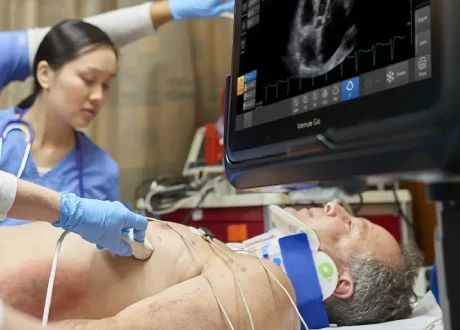
The RUSH Exam has grown up. Originally conceptualized in 2006 as a rapid medical surrogate to the trauma FAST exam, the classic protocol was built to find immediate life threats in 30 seconds or less. But hemodynamics in non-crashing patients require more thought and time. Enter RUSH 2.0—the iRUSH (Interface-Informed RUSH) exam.
Inspired by the recent interface model of hemodynamics, this updated protocol transforms the RUSH exam from a tool reserved solely for crashing patients into a standardized bedside map for comprehensive hemodynamic assessment and shock phenotyping.
Huge thanks to Sara Crager for peer review and so many contributions that made this a better work!!!
Prior EMCrit RUSH Posts
- EMCrit 256 – RUSH Redux with Jailyn Avila(Opens in a new browser tab)
- Rapid Ultrasound for Shock and Hypotension – the RUSH Exam(Opens in a new browser tab)
The CRUSH Exam (For Crashing Patients)

If your patient is actively spiraling, you don't have time for complex physiology. You need the CRUSH (Crashing RUSH) exam. This is a hyper-abbreviated screening protocol designed to be executed in under 30 seconds:
- Heart: Parasternal long and apical four-chamber views to assess chamber size and evaluate for effusion/tamponade.
- IVC: Qualitative assessment (big vs. small, collapsing vs. plethoric). No measurements.
- Morrison's in Trendelenburg: A single view focused entirely on the inferior pole of the kidney to rule out large-volume intraperitoneal free fluid.
- Aorta: Four rapid views to rule out an AAA.
- Pulmonary: Two anterior views of the lung to rule out tension pneumothorax.
The I-RUSH Exam (Interface-Informed RUSH)
If the patient is not circling the drain, you have time to do a more comprehensive and thoughtful evaluation
The I-RUSH PDF
RUSH 2.0 – I-RUSH
Images (click on image to enlarge)


Ultrasound Exams You Need to Know

EM Resus – Hemodynamic Ultrasound Skills
Basic
[] CRUSH Exam
Essential
[] LVOT VTI
[] TAPSE
[] Qualitative Valvular Assessment
[] VEXUS (especially portal vein)
[] Qualitative assessment of Intraventricular Septum
[] EF Estimation or Measurement
[] Evaluation of Gross Regional Wall Motion Abnormalities
Desirable
[] Measurement of Tricuspid Regurg Jet Peak Velocity (TRV)
Specific Ultrasound Measures
TRV
[RVSP=4(TRV)2 + RAP ] ~ PASP
Additional Information
Korbin Haycock writes:
As long as you've included both TAPSE and Tricuspid regurge velocities, I'd like to point out a few low hanging fruits to add to the raw data points. TAPSE is a decent surrogate of the RV's EF which itself is a rough approximation of RV-PA coupling (interface 4). However, an RV can fail or uncouple from the PA because of different reasons and at different loading conditions. Some examples would be an acute decompensation of chronic PHTN, a PE, or a RV infarct. So when you see a TAPSE that is low, consider it in context of the sPAP and it will give you a good clue as to the mechanism of the uncoupled 4th interface.
For examples: low TAPSE with sPAP > 65-70 is probalby decompensated prexisting PHTN; low TAPSE with sPAP elevated but < 65 is likely to be a PE; low TAPSE with normal sPAP is a good chance of being a RV infarct. There's some “ins and outs and what have yous” here, but in general the princple holds true.
Along these lines, in stable PH patients the ratio of TAPSE and sPAP has been shown to be a good surrogate of invasively meausred RV-PA uncoupling, with ratios >0.31 being normal coupling. In acutely decompensated patients I don't think the cut off of 0.31 has been investigated (becuase its probably impossible to conduct such a study), but I have many examples I saved/archived where 4th interface uncoupled patients do have lower TAPSE/sPAP ratios and that when the uncoupling is addressed the ratio dramatically increases.
A small tip I would give for the Tricuspid regurge measurers out there is you might as well trace a VTI of the TR jet instead of just getting a peak velocity. The reason is it only take a couple more seconds and the machine will spit out at you a peak pressure gradient AND a mean pressure gradient, so you get sPAP and mPAP essentially for free. Doing the TR VTI for a mPAP is additionally useful if you happen to be someone who is doing dPAP (and mPAP) estimates from the PR jet. If the TR VTI mPAP estimate is close to the PR mPAP estimate this is a great validation and cross check that the PR Doppler insonation angle and TR Doppler angles are both pretty good and the estimated values of sPAP, mPAP, and dPAP are thus likely valid.
Since you have included LVOT VTI in the iRUSH, some may want to push themselves to get a RVOT VTI as well. There are loads and loads of data to be gleaned from a RVOT VTI if you know what to look for, but a submassive/massive PE can be very reliably be recognized from certain RVOT Doppler patterns.