
Written by Ketan Patel
Spoon Feed
This study provides meaningful empirical data to support the safety of early tourniquet conversion in the ED, an area where recommendations have historically relied largely on expert opinion and smaller observational studies.
Stop the bleed, then stop the tourniquet
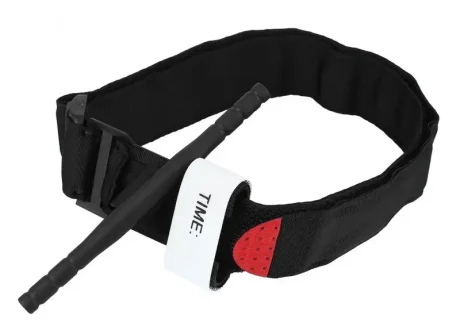
Civilian prehospital tourniquet use has skyrocketed, yet recommendations on when and how to safely convert them have largely been based on expert consensus rather than real-world outcome data.
In this retrospective cohort study, investigators evaluated the success and safety of emergency department tourniquet conversion in 647 civilian trauma patients presenting with prehospital extremity tourniquets. A total of 543 patients (83.9%) were successfully converted using wound packing, hemostatic gauze, and/or pressure dressings without requiring subsequent procedural or operative intervention. Although 9.3% of patients experienced complications, none were attributed to tourniquet use itself; rather, they reflected the severity of the underlying traumatic injuries. For every additional 30 minutes of tourniquet application, the odds of successful conversion decreased substantially (OR 0.41, 95%CI 0.32–0.53). Upper extremity tourniquets were also less likely to be successfully converted than lower extremity tourniquets (OR 0.61, 95%CI 0.38-0.97).
This was a single-center retrospective study from a high-volume Level I trauma center with relatively short median tourniquet times (40 minutes), limiting generalizability to rural systems, prolonged transport or extrication scenarios, and resource-limited settings.
How does this change my practice?
Working in a high-resource Level I trauma center with immediate surgical backup, tourniquet conversion is already a routine and generally low-stress part of trauma care. This study provides reassuring data to support that practice while emphasizing the importance of early reassessment, as longer tourniquet application times reduce the likelihood of successful conversion. It also highlights opportunities for future research to better define which patients with prolonged tourniquet times or high-risk injury patterns remain appropriate candidates for ED conversion.
Source
CONVERT: Civilian outcomes of emergency department tourniquet conversion. J Trauma Acute Care Surg. 2026 Jun 29. doi: 10.1097/TA.0000000000005106. Epub ahead of print. PMID: 42371668.