נשתמש בכתובת פעם אחת בלבד, לעדכון הזה, ונמחק אותה אחריו.
2 min read
Lachlan Driver, MD, ∗ Leland Perice, MD, ∗ Tasneem Zaihra Rizvi, PHD, †,‡ Nicole M. Duggan, MD, § Matthew Riscinti, MD, ║ David Martin, MD, ¶ Frederick Milgrim, MD, ║ Andrea Dreyfuss, MD, # Christopher Fung, MD, ∗∗ S. Zan Jafry, MS, MD, †† Michael Macias, MD, ‡‡ Joseph Brown, MD, §§ Arun Nagdev, MD, ¶ and Andrew Goldsmith, MD, MBA║║
Abstract. 
Background
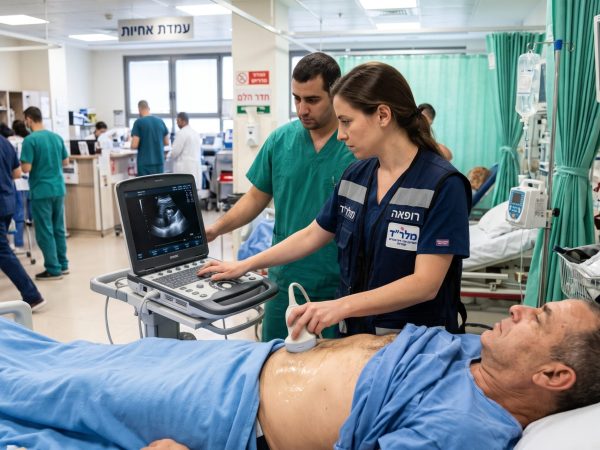
Ultrasound-guided nerve blocks (UGNBs) are increasingly used in emergency departments (EDs), but factors associated with technical difficulty remain poorly characterized.
Objectives
To characterize the frequency of technical difficulty during ED UGNBs and explore patient-, provider-, and block-level factors associated with difficult procedures.
Methods
We performed a retrospective analysis of the multicenter National Ultrasound-guided neRVE (NURVE) Registry, including UGNBs performed at 11 U.S. EDs from January 2022 through December 2023. This interval was selected to capture the complete initial two-year period of NURVE Registry data collection. Technical difficulty was defined by operator self-report using a standardized registry question. Mixed-effects logistic regression with institution as a random intercept was used to evaluate factors associated with technical difficulty.
Results
Among 1725 UGNBs included in the analysis, 82 (4.8%) were reported as technically difficult. In unadjusted analyses, technical difficulty was more common among patients with obesity and differed by block group. In mixed-effects regression, body mass index (BMI) ≥ 30 kg/m² was independently associated with increased odds of technical difficulty compared with BMI 18.5–24.9 kg/m² (odds ratio [OR] 2.94, 95% confidence intervals [CI] 1.58–5.47). Compared with fascia iliaca/femoral region blocks, truncal plane blocks (OR 0.20, 95% CI 0.05–0.87), distal upper-extremity blocks (OR 0.12, 95% CI 0.02–0.94), and distal lower-extremity blocks (OR 0.32, 95% CI 0.10–0.99) were associated with lower odds of technical difficulty. Provider role and prior procedural experience were not significantly associated with difficulty in unadjusted analyses.
Conclusions
Technical difficulty during ED UGNBs was uncommon. Obesity was the most consistent predictor of procedural difficulty, while block-group associations were more modest and influenced by site-level factors. These findings may help inform procedural planning and UGNB training initiatives.
Keywords
point-of-care ultrasound
;
ultrasound-guided nerve block
;
regional anesthesia
;
obesity
;
emergency medicine
;
procedural difficulty