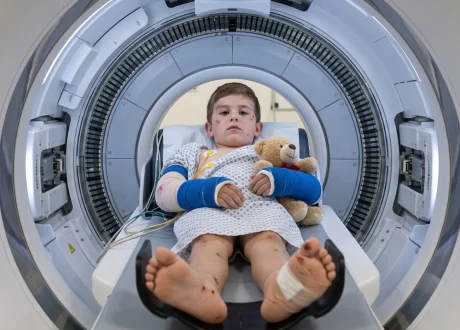

Caring for patients with severe traumatic brain injury (TBI)—especially pediatric patients—is high-stakes and high-stress. In severe TBI, primary brain injury occurs at the moment of impact; our primary goal in the emergency department is preventing secondary brain injury caused by hypoxia, hypoperfusion, elevated intracranial pressure (ICP), seizures, hyperthermia, and dysglycemia.
In this episode, ED Clinical Pharmacist Haley Burhans returns to walk us through key medications for the acute management of severe TBI. We’ll cover airway management, rapid sequence intubation (RSI) drug choices, hyperosmolar therapy, seizure prophylaxis, TXA, and post-resuscitation care.
1. Airway & Rapid Sequence Intubation (RSI)
Optimizing oxygenation and ventilation is critical, as hypoxemia directly contributes to secondary brain injury. Selecting hemodynamically neutral agents is essential to maintain cerebral perfusion pressure (CPP).
Induction Agents
- Etomidate (0.3 mg/kg, max 40 mg): Hemodynamically neutral, making it a reliable choice for TBI patients with unstable or uncertain blood pressures.
- Ketamine (1–2 mg/kg): Excellent option for borderline low or hypotensive patients. Historical concerns regarding ketamine-induced ICP spikes have been largely disproven; bolus doses <5 mg/kg do not cause sustained ICP elevations and offer valuable analgesia.
Paralytics
- Succinylcholine (1.5 mg/kg TBW, max 200 mg): Preferred if an immediate post-intubation neurological exam is required by neurosurgery, given its short duration (~10–15 min).
- Rocuronium (1.0–1.2 mg/kg): Higher dosing ensures rapid onset. Preferred when securing the airway smoothly and keeping the patient still for immediate CT scanning is the priority. Note: Paralyzes the patient for 45–60 minutes, so obtain a baseline neuro exam first or have a plan for reversal if an early exam is needed.
Pre-Medications (Lidocaine vs. Fentanyl)
- Lidocaine (1.5 mg/kg): Theoretically blunts airway-reflex-induced ICP spikes during intubation, but takes 2–5 minutes to reach peak effect and introduces cardiac risks in undifferentiated trauma patients. Generally omitted when rapid airway placement is required.
- Fentanyl (1–2 mcg/kg): Preferred pre-medication for hypertensive or tachycardic patients to blunt sympathetic surges and prevent ICP spikes during laryngoscopy.
2. Post-Intubation Sedation & Hemodynamic Support
- Hypotensive / Unstable: Push-dose Ketamine (1–2 mg/kg) provides deep sedation while preserving blood pressure.
- Hypertensive / Stable: Propofol infusion (Adults: ~40 mcg/kg/min; Pediatrics: ~60 mcg/kg/min due to faster metabolism) helps suppress ICP and optimize CPP.
- Pressors: If vasopressors are required to maintain target SBP (>100–110 mmHg depending on age), titrate carefully to clear hemodynamic goals. Avoid reflexively starting high-dose pressors if transient hypotension was primarily driven by hypoxia or cardiac arrest before airway placement.
3. Seizure Prophylaxis
Post-traumatic seizures increase metabolic demand and elevate ICP.
- First-Line Agent: Levetiracetam (Keppra) is non-inferior to Phenytoin for preventing early post-traumatic seizures (within 7 days) and carries a significantly lower risk of cardiac side effects and agitation at standard loading doses.
- Dosing:
- Loading Dose: 20–25 mg/kg IV load (common adult loading dose is 20 mg/kg or a standard 1,000–2,000 mg IV dose).
- Maintenance: 25 mg/kg IV BID in pediatrics; 1,000 mg IV BID in adults (adjusted for renal function).
4. Hyperosmolar Therapy for Cerebral Edema
When signs of impending herniation or acute ICP elevation are present:
- Hypertonic Saline (3% NaCl):
- Pediatrics: First-line agent at 2–5 mL/kg IV. Avoids the diuretic/hypovolemic risks associated with mannitol in volume-dependent pediatric patients.
- Adults: Strongly preferred over mannitol due to less rebound ICP elevation and easier administration (mannitol requires inline filters and can crystallize).
- Mannitol (0.5–1 g/kg): Alternative option in adults, but can cause osmotic diuresis, hypotension, and rebound ICP increases.
- Combining/Redosing: Avoid giving both hypertonic saline and mannitol simultaneously as initial therapy—if the patient deteriorates 30 minutes later, therapeutic options are exhausted. Hypertonic saline is easier to redose safely after monitoring serum sodium levels (peak effect around 1 hour).
5. Role of Tranexamic Acid (TXA)
- Isolated TBI in Adults: The CRASH-3 trial showed potential 30-day mortality benefits for mild-to-moderate TBI within 3 hours of injury, but limited clear benefit in isolated severe TBI. If a severe TBI is an isolated injury, routine TXA push is not strongly advocated if it delays primary line access for other resuscitation meds.
- Polytrauma / Pediatrics: If TBI is part of multi-trauma or severe pediatric trauma within 3 hours of injury, TXA is appropriate as part of overall trauma resuscitation protocols.
6. Critical ED Targets & Common Pitfalls
- Temperature Management: Target strict normothermia (36.0°C–38.0°C). Fevers (>38°C) double metabolic demand and worsen secondary brain injury. Consider bundling IV acetaminophen into post-RSI orders.
- Glucose Control: Avoid extreme hyperglycemia; treat severe elevations (>200 mg/dL or noted high levels on VBG) early in the ED.
- Communication & Lines: Hyperosmolar agents are incompatible with many continuous infusions. Clearly communicate upper and lower blood pressure limits with nursing to avoid over-titrating antihypertensives or sedatives.
What are your go-to meds for severe TBI? What do you avoid? Share your experience with us on social media @empulsepodcast or at ucdavisem.com
Hosts:
Dr. Julia Magaña, Professor of Pediatric Emergency Medicine at UC Davis
Dr. Sarah Medeiros, Professor of Emergency Medicine at UC Davis
Guests:
Haley Burhans, PharmD, Emergency Medicine Clinical Pharmacist at UC Davis
Resources:
ACEP Critical Care Medicine: Key Aspects in the Management of TBI in the ED to Minimize Secondary Injury by Miyant’e Newton, MD, March 12, 2024
Brain Trauma Foundation Guidelines for the Management of Severe TBI, 4th Edition
Brain Trauma Foundation Guidelines for the Management of Pediatric Severe TBI, 3rd Edition