Nicholas Szoko, MD, PhD1,2Daphne Lew, PhD, MPH3Taylor Kaser, MPH
Key Points
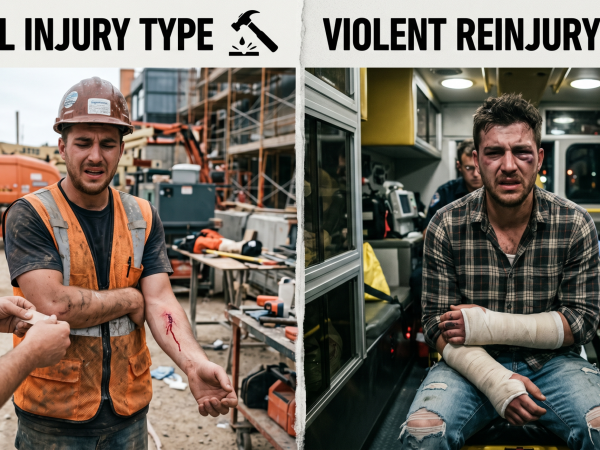
Question How does risk of violent reinjury vary across different initial injury types?
Findings In this cohort study of 29 810 patients with violent injuries, the probability of reinjury at 7 years was highest among those with index blunt assault (17%) and stabbing (20%) injuries. Individuals with index firearm injuries had the highest risk of firearm reinjury (13%).
Meaning The findings of this study suggest that preventing violent reinjury requires understanding different injury contexts to better address root causes of repeated violence exposure.
Abstract 
Importance Violent injuries are the leading cause of death among children and young adults in the United States. Violent injury may increase the risk of subsequent injury (ie, violent reinjury), but it is unclear how this risk varies across different injury types (eg, blunt assault, stabbing, firearm).
Objective To describe patterns of violent reinjury across different injury types to inform tailored prevention strategies.
Design, Setting, and Participants This multicenter cohort study included patients who presented with violent injuries to 2 adult and 2 pediatric level I trauma centers in St Louis, Missouri, from January 2016 to December 2023.
Exposures Violent injuries were classified into 3 injury types: blunt assault, stabbing, and firearm.
Main Outcomes and Measures The main outcome was time to recurrent violent injury in years. We used Kaplan-Meier time-to-event analyses to estimate the probability of violent reinjury across different initial (index) and recurrent injury types at 1, 5, and 7 years from index injury.
Results There were 29 810 individuals with violent injuries during the study period. The age distribution was as follows: 17 228 (57.8%) older than 26 years; 7690 (25.8%), 18 to 26 years; and 4727 (15.8%) younger than 18 years. Most were male (19 933 [66.9%]), and there were 21 126 (70.9%) Black and 7031 (23.6%) White individuals, with 792 (2.7%) belonging to an additional racial group (American Indian or Alaska Native, Asian, Native Hawaiian or Pacific Islander, other, or multiracial), having unknown race, or declining to disclose race. Among 29 038 patients (97.4%) who survived their index injury, 3899 (13.4%) experienced reinjury. The 7-year probability of any reinjury was highest among individuals with index stabbing (19.5% [95% CI, 17.5%-21.8%]) and blunt assault (17.4% [95% CI, 16.6%-18.2%]) injuries. Patients with index blunt assault injuries were more likely to experience blunt assault reinjury (7-year probability: 13.2% [95% CI, 12.6%-13.8%]) compared with other reinjury types. The 7-year probability of firearm reinjury was highest among those with index firearm injuries (12.6% [95% CI, 11.8%-13.4%]).
Conclusions and Relevance In this cohort study of individuals with violent injuries, reinjury was common, but this risk varied across injury types, which may be due to differing contextual factors. Preventing violent reinjury requires attention to these issues to better address the root causes of repeated violence exposure.