Podcast summarizing recent emergency medicine posts from the past week.
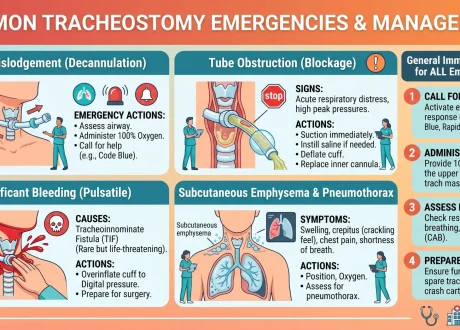
**PODCAST: Laryngectomy and Tracheostomy Emergencies; Roadside to Resus**
That single anatomical difference determines where oxygen and ventilation need to be delivered. Rob & JamesThe post PODCAST: Laryngectomy and Tracheostomy Emergencies; Roadside to Resus first appeared on האיגוד הישראלי לרפואה דחופה.
—
**PODCAST: July 2026 Annals of Emergency Medicine by Annals of Emergency Medicine**
On the July episode of the Annals of Emergency Medicine podcast, Ryan and Rory discuss social vulnerability in EMS recognition, ED social care approaches, pediatric prehospital readiness, and much more.The post PODCAST: July 2026 Annals of Emergency Medicine by Annals of Emergency Medicine first appeared on האיגוד הישראלי לרפואה דחופה.
—
**Pearls and Pitfalls for the Emergency Clinician: Beta Blocker and Calcium Channel Blocker Toxicity**
Beta blockers such as propranolol can present with altered mentation, seizures, and ventricular dysrhythmias resulting from their ability to block sodium channels. While laboratory evaluation does not confirm the diagnosis of beta blocker or calcium channel blocker toxicity, laboratory testing such as renal function and lactate can be used to evaluate for end organ perfusion, while acetaminophen, salicylate, and digoxin concentrations can be sent to evaluate for possible concomitant ingestions.
—
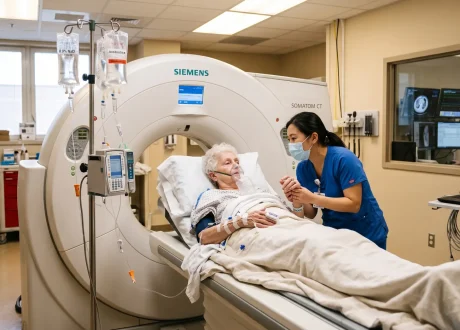
**Clinical Features, CT Imaging Decisions and Yield by Age in Adults With Abdominal Pain in the Emergency Department**
Objectives: Older adults with abdominal pain present diagnostic uncertainty due to less informative histories/exams, broader etiologies, and higher morbidity. These results support age-aware imaging decisions and motivate reframing ED abdominal pain as a geriatric-specific chief complaint.
—
**NEJM: Prehospital Resuscitation with Type O Whole Blood for Trauma and Hemorrhage**
Jason L Sperry 1, Francis X Guyette 2, Bryan A Cotton 3, James F Luther 4, Richard B Utarnachitt 5, Matthew E Kutcher 6, Brian J Daley 7, Allan B Peetz 8, Mayur B Patel 8, Michael D Goodman 9, Jeffrey A Claridge 10, Nimitt Patel 10, Brian G Harbrecht 11, Zain G Hashmi 12, Ryan Zarychanski 13, Matthew D Neal 1, Mark H Yazer 14, Christian Martin-Gill 2, Laura E Vincent 1, Ashley M Harner 1, David E Meyer 3, Andrew J Latimer 5, Bryce R Robinson 15, Catherine L McKnight 7, William R Hinckley 9, Keith R Miller 11, Jan O Jansen 12, Douglas Martin 16 17, Erin E Fox 3, Bedda L Rosario-Rivera 4, Stephen R Wisniewski 4; TOWAR Study Group The post NEJM: Prehospital Resuscitation with Type O Whole Blood for Trauma and Hemorrhage first appeared on האיגוד הישראלי לרפואה דחופה.
—
**NEJM: How to Reverse Any Anticoagulant**
Four-factor prothrombin complex concentrate (PCC) is used off-label for DOAC reversal, with typical doses of 25–50 U/kg reported in small observational studies. I do not believe andexanet alfa is justified, given its cost and safety profile compared to four-factor PCC.
—
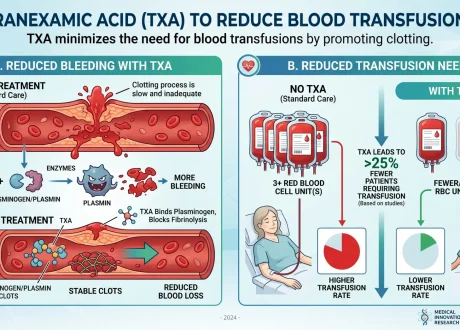
**NEJM: Hospital Policy of Tranexamic Acid to Reduce Transfusion in Major Noncardiac Surgery**
Brett L Houston 1 2, Daniel I McIsaac 3 4 5, Rodney H Breau 3 4, Salmaan Kanji 3 4, Peter Greenstreet 4, Meghan Andrews 3 6, Sinziana Avramescu 7, Hema S Bagry 1, Robert Balshaw 1, Jayesh Daya 1, Kaitlin Duncan 8, Christopher C Harle 9, Eric Jacobsohn 1, Tina Kerelska 7, Marshall Pitz 1 2, Paul Komenda 1, Sarah McIsaac 8 10, Tim Ramsay 3 4, Tarit Saha 11, Alan Tinmouth 3 4, Angela Recio 1, Daniel Szoke 9, Marshall Tenenbein 1, Sarah Slagerman 12, Dayna Solvason 12, Robert Talarico 3 4 5, Dean A Fergusson 3 4, Ryan Zarychanski 1 2 12 Methods: We conducted a multicenter, double-blind, cluster-randomized, placebo-controlled trial involving patients undergoing noncardiac surgery who were at high risk for red-cell transfusion.
—
**Save Don’t Swap: Just Use EMS Equipment in OHCA?**
There is also a huge difference between initial shockable rhythms for EMS versus in the ED (26.5% vs. 10.5%, respectively) creating an indication and selection bias. This only highlights one of many potential delays that may occur when the resuscitation is not tightly woven and run with intention.