
Wait! He was Stable!
What Happened?
“DOCTOR TO POD 1 FOR A TRANSFER CALL, DOCTOR TO POD 1 FOR A TRANSFER CALL!” you hear the voice of the hospital call out.
“He’s placing a central line in room 9, why the overhead page?” Shannon, your charge nurse, asks the clerk.
“The transfer center said they need to talk to an attending physician immediately! Apparently AirMedic 2915 has an unstable patient and needs urgent support.”
“I’ll go pull him out of 9. Get the chopper on the phone.” Shannon says as she walks over to room 9.
“I need you now! You’re going to have to let the residents place this line without you.” Shannon says as she pokes her head into the room where you’re placing a central line on a very septic patient.
“Can it wait 5 minutes? We’re almost done…” you start to say
“No.” Shannon says, cutting you off with a tone she doesn’t often use. “AirMedic 2915 is calling in with an inflight emergency and you know they don’t do that just for fun. They must really need your help.”
“I’ve got this. You go,” the senior resident says to you.
You and Shannon hustle over to the clerk’s desk where the phone is waiting for you. “Doc, AirMedic 2915 is holding for you on line 1.” She says.
“Hello! AirMedic 2915, this is the hospital, what’s going on?”
“Doc, we have a big problem up here and need help. We’re transporting a 16-year-old male after an intentional overdose. He found grandma’s pills and took them all. Apparently took at least 50 pills of amlodipine 10 mg but was completely fine at the sending hospital for 10 hours. Then, he suddenly crashed HARD and now, he’s our problem. Vitals were shit and getting worse in the air. We have no blood pressure and limited supplies. We either need to divert this transport or turn around. He’s in trouble. We’re in trouble. This is all bad. We … have… some… Need…. Pressors. Blue…. CLICK.” And the line goes dead.
Well, that’s not good. “Why do these cases always seem to find you?” Shannon asks as you look dumbfounded at the phone.
“Alright, I need the transfer center to get back in touch with AirMedic 2915 immediately. Also, who’s the sending doc? I need to talk to them too and get more of the story. Also, also, I need Tox to be on the call for when we get the flight team back on the line.
“Yes, Doctor, I figured you’d want to talk to the sending team. It’s Dr. Finster working at one of the rural ERs about 60 miles south of us. He’s aware of the situation holding for you on line 2,” your clerk tells you.
“Thank you!” you tell her.
“Danny!” you say, switching to line 2. “Catch me up. What’s going on in the air right now?”
“Hey man! I knew you’d be working with a case like this. Here’s the story. 16-year-old kid. Broke up with his girl friend and tried to take his grandmother’s entire medication cabinet. He said he took over 500 mg of amlodipine but he looked completely fine for hours. That’s a ton of pills to swallow so I figured maybe he was exaggerating things. I texted you the EKG to look at since I know you’re gonna ask me. Anyway, PICU was afraid to give us the green light to move him so we sat on him for somewhere around 10-11 hours. I was running minimal Epi and he seemed to be holding steady on 10 mcg/min. No dose adjustments for 6 hours. We called PICU and they said fine, send him on up. AirMedic2915 came, grabbed him, and away they went. Tox is aware of the patient and said to send the medics with extra pressors since these cases can go south fast, but we had to get him out of here. It’s just me, 2 nurses and a tech in the middle of nowhere. Hell, even to get him to the chopper, they had to get security to clear the parking lot so the bird could land.”

Rate: about 75 beats per minute
Rhythm: Sinus, I think
Axis: Normal
Intervals: It’s hard to really see P waves here. I think there are some that follow the T waves, which would map to a VERY prolonged PR interval, if they are truly P waves. QRS is narrow. QTc looks ok
Morphology: Pretty reasonable
Final read: Tough to be confident in the P waves here, but I think normal sinus with a very prolonged PR interval.
“Yeah, Danny, I agree with you. Nothing too exciting on that EKG. And I get it; you had to get him out of that small ER. You’re not an ICU. Maybe the kid just picked the wrong time to crump.”
You look over and see your clerk waving excitedly at you, “Doc, I have Dr. Boroughf with tox and AirMedic2915 on line 1 holding for you,” she says.
“Danny, I gotta go. I’ll text you later and let you know what’s going on.” You say as you hang up.
“Dr. B! Glad to have you on the line with me with this case, he sounds super sick…”
“Hey guys, Shannon texted me some of the details to save us time,” says Dr. B. “Big dose, false reassurance, sudden crash– sounds like classic amlodipine. This is going to suck for everyone. Hey Bird Nerds, what’s he looking like right now, what’s his blood glucose and what’s your ETA to the PICU?”
“Hey Dr. B. What have we said about that nickname, man? Anyway, the patient is mentating well but we’re not quite sure how with a BP of 60/35 despite a maxed-out Epi drip. Heart rate’s in the 60s; ECG is unchanged. His pulse ox is starting to dip into the 80s. Blood glucose is 180, but he’s not diabetic, so that’s weird, We’re still about an hour out from the PICU, but we’re only 15-20 minutes away from you. Got any thoughts?”
“This is going to get a lot worse and a lot more complicated,” Dr. B laments. “Not trying to toot my own horn here, but literature has shown that critically ill poisoned patients benefit from having a Medical Toxicologist at the bedside. If there’re no objections, we have room here and can treat 16-year-olds. We need to divert and land as soon as possible.”
“In the meantime,” Dr. B continues, “remember that amlodipine is a potent vasodilator, so as much as I like Epi, we need something that is a more potent peripheral vasoconstrictor. I’m happy to defer to what you have in the belly of the bird but make sure it has all the alpha activity. Phenylephrine and NorEpinepherine are your best choices. Vasopressin could work in a pinch but is more of a third-line agent. Also, there is no maximum. So, whatever you have, turn it up!”
“Say no more doc! We’ll hang something else and be on the ground in 15.”
***
Just as you finish setting up the resuscitation bay, the doors open and the fight teams hurriedly walks in with a very unwell-appearing patient. Multiple IV bags swing as they transfer him over to the bed. “You already know the story,” the medic starts. “Here’s where we are now: HR 70, SBP 70. GCS 14. Currently on max doses of Epinephrine and NorEpinephrine. We’ve given a slug of calcium for good measure. EKG remains unchanged. Blood glucose is now up to 200.”
You turn to Dr. B as the ICU team walks in. “Ok, poison guy. You wanted him, you got him. Explain where we go from here.”
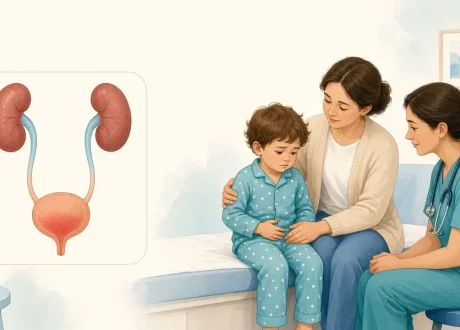
“Here’s the quick and the dirty. Recall from last time we talked, amlodipine, a dihydropyridine calcium channel blocker, is selective for peripheral arterioles, so its main action is peripheral vasodilation. At very high doses, it can cause vasoplegia and distributive shock (a pipe problem). That’s bad. At even higher doses, it becomes non-selective and starts to impact both cardiac calcium channels (as well as the pancreatic calcium channels involved in insulin release). This results in cardiogenic shock (a pump problem). That’s worse.”
“So, do we treat this like other calcium channel blockers? I mean, we’re already maxed out on two pressors and aren’t winning. What’s next? Is this where high-dose insulin comes into play?” asks the ICU resident.
“With amlodipine, it bit more complicated. First thing’s first: when talking toxicology and vasopressors, there is no such thing as a “max” dose. Because of the diffuse calcium channel blockade, we can safely blow waaaay past the sepsis “maximums” without losing toes.
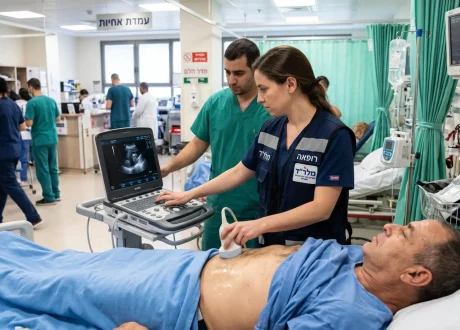
“If that doesn’t work, then we have to figure out which problem is worse: the pump or the pipes. In large-dose amlodipine overdose, the presumption is that the pipes are the problem, but the non-selectivity puts both problems in play. One way to differentiate between the CCB shock phenotypes, we can reach for the ultrasound, look at LV function and ask yourself: ‘does the squeeze look good?’ With that info, you can follow my grand unified flowchart of CCB management:”

“Ok, so this is a good starting point,” you say. “I’m familiar with high-dose insulin/euglycemia for CCBs, less so with methylene blue (here’s the science behind methylene blue, but that’s a talk for another day). But I can’t help but notice that all things end with ECMO. I thought that was only useful for pump failures, and amlodipine overdose is most certainly a pipe failure, right? So, what gives?”
“Ah yes, glad you noticed. And you’re right, we typically think about ECMO for pump failure,” says Dr. B. “But there are a few things to point out when talking about amlodipine in particular which we can see in our patient:
- Large amlodipine overdose results in both pump and pipe problems. While vasoplegia is probably the leading issue, you can’t argue that there is some contribution from cardiogenic shock. Notice that our patient’s HR is only in the 70s, yet he’s on stupid-high doses of catecholamines. If amlodipine was just a vasodilator, his heart should be beating like a friggin’ hummingbird. Since it’s not, we know there is some degree of failure. Further, his blood glucose is rising, which indicates blockade of cardiac L-type calcium channels impacting both chronotropy (rate) and inotropy (squeeze). If there’s no change in HR or squeeze after starting high-dose insulin, then the pump has issues.
- Numerous case reports and pre-published case reports of single-agent and combined amlodipine overdoses has shown improved survival from VA-ECMO when patients “look” vasoplegic. (see below)
“Great,” notes the ICU team. “I think we’ve got enough to start with. Fortunately, if it all falls apart, we do have ECMO here. Let’s get him upstairs and give him everything we’ve got.”
“Sounds good,” says Dr. B. “And the good news is, I’m only a phone call away and can be at the bedside when things get dicey.”
Case Conclusion
“You know, Doc, these kind of cases only happen when you’re on…” Shannon says as you finish signing out. “12 hours, starting with an emergent air diversion, then multiple ICU admissions, a code, the list goes on and on. Do you have big plans for this evening? Or just going to bed?”
“Well I think I’m going to…” you begin when you’re suddenly cut off by the hospital voice.
“CODE ECMO ICU BED 10 CODE ECMO ICU BED 10”
“Oh no. That’s our kid from the helicopter. Come on, let’s go up and see if they need a hand,” Shannon calls as you and her sprint off to the stairs.
“EPI! Another amp. Now! Resume CPR!” you hear Dr. B call out as you and Shannon run in.
“Tox guy! What happened??” you ask.
“He crashed. We knew it was coming. ECMO team should be here any minute. I called them in 20 minutes before he went into PEA.”
“Dr. B, ECMO team walking into the ICU now!” one of the ICU nurses calls out, as she sees one of her colleagues point them towards bed 10.
“Bill, we’re here, this is the amlodipine OD, right?” the ICU attending asks, as he directs his team to set up and hustle.
“Yes, that’s correct. We need him on VA ECMO ASAP. We’ve been coding for about 8 minutes. Asystole, never a shockable rhythm,” Dr. B reports.
“Alright, you heard the toxicologist, let’s get moving!”
Recap:
- Amlodipine is a TRICKY overdose to treat. These patients need EARLY medical toxicologist consultation
- Don’t be lulled into a false sense of security with these patients. Even if they seem fine, they still should be observed for at least 24 hours in an ICU
- They will need LOTS of pressors. Remember, in tox there is no max dose of pressors. Crank them up!
- Just to really hightlight it, I’m going to say it again, There is NO max dose of pressors in tox patients
- Reach for your ultrasound early, it can help you determine if your biggest problem is pump failure or pipe failure
- Let your ECMO team know about these patients sooner than later. They can get very sick very quickly
- A HUGE thank you to Dr. Bill Boroughf who runs the fantastic substack, “The Thing About Poison”
Hit me up with any questions,
Lloyd