Podcast summarizing recent emergency medicine posts from the past week.
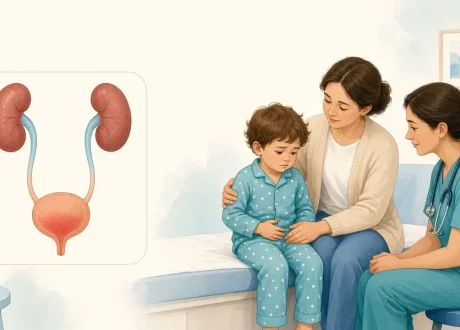
**Clinical Practice Guideline for the Diagnosis and Treatment of Urinary Tract Infection in Children From 8 Days to 5 Years of Age**
Alverson BK, Hains DS, Downs SM, El Feghaly RE, Forster CS, Jain S, Johnston A, Mattoo TK, Nelson CP, Olakanpo O, Otero HJ, Peters CA, Poppinga NM, Saha D, Schroeder AR, Senerth E, Pilcher L, Flinn SK, Morgan RL, Mustafa RA Abstract The post Clinical Practice Guideline for the Diagnosis and Treatment of Urinary Tract Infection in Children From 8 Days to 5 Years of Age first appeared on האיגוד הישראלי לרפואה דחופה.
—
**NEJM: Intravenous Thrombolysis for Acute Ischemic Stroke — New Directions**
Integrating IVT with endovascular thrombectomy, which improves outcomes in patients with stroke due to large cerebral vessel occlusion, has been a particular challenge. The post NEJM: Intravenous Thrombolysis for Acute Ischemic Stroke — New Directions first appeared on האיגוד הישראלי לרפואה דחופה.
—
**Point-of-Care Ultrasound Diagnosis of Retrobulbar Hematoma: A Sight-Threatening Emergency**
Irreversible vision loss can occur within 60 to 120 minutes without intervention.1 Diagnosis has traditionally relied on clinical findings including proptosis, relative afferent pupillary defect, elevated intraocular pressure, and diminished visual acuity and is often confirmed with CT. Point-of-care ultrasound (POCUS) offers a rapid bedside alternative. The post Point-of-Care Ultrasound Diagnosis of Retrobulbar Hematoma: A Sight-Threatening Emergency first appeared on האיגוד הישראלי לרפואה דחופה.
—
**This ECG is Waiving a Flag; Did you Catch it?**
I’d activate the cath lab over this, but it doesn’t exactly follow traditional “STEMI Teaching” “Oh! Did you know that this ECG tells me where the lesion is most likely going to be?” “Well… Um.. It’s a lateral STEMI, right?
—
**Resuscitation: Artificial Intelligence-Assisted, Electrocardiogram-Derived, Sequential RuleBased Decision Tree for Exclusion of Acute Coronary Syndrome as the Etiol‐ ogy of Out-of-Hospital Cardiac Arrest**
Arom Choi 1, Hanna Yoon 1, Stephen Gyung Won Lee 1, Chaeryoung Park 1, Eunah Han 2, Yun Ho Roh 3, Ji Hoon Kim 4 Abstract Background: After out-of-hospital cardiac arrest (OHCA) with return of spontaneous circulation (ROSC), deciding which patients without ST-segment elevation warrant emergency coronary angiography is difficult, as standard electrocardiogram (ECG), troponin, and echocardiography are limited in the early post-arrest window.
—
**An original closed reduction technique for acute shoulder dislocation: The FEAT method**
Methods: This prospective study enrolled 30 patients presenting with anterior glenohumeral dislocation at the Emergency or Orthopedics outpatient department of Hubei Provincial Hospital. Conclusion: The FEAT method is an effective, rapid, and minimally painful technique for anterior shoulder dislocation reduction.
—
**PODCAST: AI in Emergency Departments with Dr. Jesse Pines**
In this Frontline Weekend Playlist episode, hear Dr. Jesse Pines present “The Current and Future of Artificial Intelligence in Emergency Departments” at the Fourth Annual Leadership Symposium & EM: High Risk – Do Not Miss Conference in Beaver Creek, Colorado. He explores the rapidly evolving role of AI in emergency medicine, discussing current applications such as ambient documentation, clinical decision support, chart summarization, and quality improvement while examining the opportunities, limitations, and future implications of AI for emergency physicians.The post PODCAST: AI in Emergency Departments with Dr. Jesse Pines first appeared on האיגוד הישראלי לרפואה דחופה.
—
**Are We Hypersensitive about IV Contrast Reactions?**
Written by Megan Hilbert Spoon Feed The catch-all term of “contrast allergy” needs to be carefully clarified with patients. Premedication can likely be achieved with antihistamine-only in patients that have exhibited a hypersensitivity reaction, but switching contrast agent is even better at preventing future reactions.
—
**Unscheduled Procedural Sedation Multidisciplinary Delphi Consensus Guidelines**
Unscheduled Procedural Sedation Multidisciplinary Delphi Consensus GuidelinesApproved by the ACEP Board of Directors, April 29, 2026 is a title The post Unscheduled Procedural Sedation Multidisciplinary Delphi Consensus Guidelines first appeared on האיגוד הישראלי לרפואה דחופה.
—
**Predictors of Technical Difficulty in Emergency Department Ultrasound-Guided Nerve Blocks: A Multicenter NURVE Registry Analysis**
Background Ultrasound-guided nerve blocks (UGNBs) are increasingly used in emergency departments (EDs), but factors associated with technical difficulty remain poorly characterized. The post Predictors of Technical Difficulty in Emergency Department Ultrasound-Guided Nerve Blocks: A Multicenter NURVE Registry Analysis first appeared on האיגוד הישראלי לרפואה דחופה.