Paolo Spriano, MD
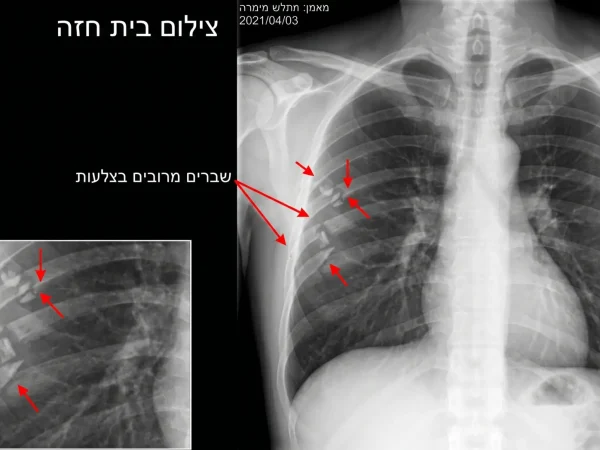
Rib fractures (RF) are the most common form of chest wall injury and are one of the most prevalent injuries overall. An estimated 10% of all trauma patients and 55% of those with blunt chest wall trauma has RF.
RF varies widely in severity, ranging from simple isolated fractures to multiple or multifragmentary fractures that can cause flail chest that can lead to an unstable chest, particularly in patients with multiple trauma. Considerable heterogeneity among individuals, along with significant epidemiologic differences, makes it difficult to identify a universal solution for their management. Surgical treatment, despite gaining considerable popularity in recent years, remains a controversial topic.
Diagnostic Tools
The management of patients with acute chest trauma is primarily based on the principles of Advanced Trauma Life Support. Standard chest x-ray is a valuable tool for the prompt assessment of potentially life-threatening acute chest injuries. However, it has poor diagnostic accuracy, with approximately 50% of RF not detected on routine chest x-rays. Oblique and special rib views can increase sensitivity but are not routinely performed.
Thoracic ultrasound can serve as an alternative for detecting thoracic injuries, such as traumatic hemothorax and RF. Although it is associated with lower diagnostic accuracy for traumatic pneumothorax detection, it is superior to chest x-ray for identifying RF. However, Current guidelines recommend chest x-ray as the most appropriate primary imaging modality in cases of suspected rib injuries.
CT has proven to be the most practical and sensitive method for detecting RF. CT is often performed after plain radiographs and is considered the gold standard. The importance of detecting RF is underlined by the fact that pulmonary morbidity and mortality directly increase with each additional RF, approaching a mortality of 40% if more than six ribs are fractured.
Flail Chest
An unstable chest is a severe thoracic injury defined as a fracture of three or more adjacent ribs in at least two different places. Clinical findings have shown that even smaller segments involving one or two ribs can function as unstable segments if they move independently and generate negative intrapleural pressure.
The Western Trauma Association, in its algorithm for RF, describes this anatomic pattern as a disconnected portion of the chest wall that paradoxically moves inward during inspiration. An unstable chest is primarily a clinical diagnosis because not all individuals with this type of fracture exhibit clinical signs of paradoxic movement. This injury alters normal respiratory mechanics and imposes a greater physiologic burden on older patients and those with chronic pulmonary diseases.
Pain Control
Nonsurgical treatment is the standard of care for thoracic injuries, provided the injury involves no unstable chest or severe chest wall deformities with displaced ribs. Healing, therefore, usually occurs spontaneously and is beneficial if it avoids potential surgery-related complications. Spontaneous bone healing is associated with considerable pain and discomfort. Therefore, the cornerstone of conservative management is adequate pain control to prevent secondary pulmonary complications resulting from inadequate ventilation due to painful respiratory movements. This is best achieved through a stepwise protocol.
Analgesia is typically initiated in the emergency department with a combination of acetaminophen, nonsteroidal anti-inflammatory drugs, and opioids. Subsequently, repeated assessments of pain scores should be performed both at rest and during exercise or coughing.
A Numerical Rating Scale score of 4 or higher indicates moderate-to-severe pain. In clinical settings, these scores prompt a review of the pain management plan, which may involve multimodal analgesia or regional interventions, such as thoracic epidural analgesia. However, several studies have questioned the efficacy and safety of epidural catheters.
Persistently high pain scores despite adequate nonsurgical measures should prompt the referral of patients for surgical treatment. Selecting the optimal pain relief technique may not always be straightforward; therefore, a collaborative approach with a pain specialist and respiratory physical therapist is highly recommended.
Pain Assessment
Pain associated with RF is a significant but underestimated problem because individuals often avoid physical and social activities due to pain. Pain is one of the criteria used to determine whether a patient is a candidate for surgical RF stabilization. However, traditional pain assessment in those with RF significantly underestimates the actual pain intensity.
Uncontrolled pain caused by RF can lead to hypoventilation, impairment of airway patency, and progression to respiratory failure and death. Pain management is, therefore, the basis of treatment, but pain assessment is usually performed at rest. An innovative approach involves assessing movement-induced pain to more accurately identify pain that limits physical function.
One study hypothesized that in patients with RF, Movement-Evoked Pain Scores (MPS) are typically and significantly higher than Resting Pain Scores (RPS). MPS and RPS differed on 79% of patient hospitalization days, with a mean difference of 2.3 (P <.001). A higher mean MPS was also correlated with higher mean daily opioid use, supporting the hypothesis that MPS could improve pain control and clinical outcomes in these patients.
Practice Points
- RF resulting from chest trauma can be effectively managed with a personalized multimodal nonsurgical pain control strategy as well as surgical stabilization for selected individuals.
- For both treatment options, a multidisciplinary approach is essential, with pain relief as the top priority.
- The MPS for patients with RF are higher than the RPS. The incorporation of MPS into patient care may improve pain control and outcomes.