Podcast summarizing recent emergency medicine posts from the past week.
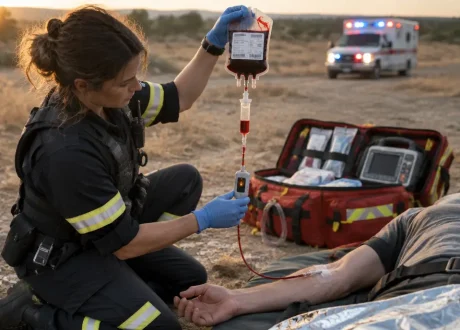
**מהספרות לשטח: דם מלא באמבולנס: מה כדאי לשאול לפני שמרחיבים?**
הגיליון סוקר ניסיון בהפעלת תוכנית למתן דם מלא באמבולנסים בשתי ערים בארה״ב, ומתייחס להיבטים הקליניים והתפעוליים של התוכנית. על רקע השימוש הקיים בדם מלא במסוקי מד״א והאפשרות להרחבתו לאמבולנסים נבחרים, המאמר מעלה שאלות הנוגעות לבחירת המטופלים, זמינות מנות הדם, ניהול המלאי והאיזון בין המשאבים המושקעים לתועלת הצפויה.
—
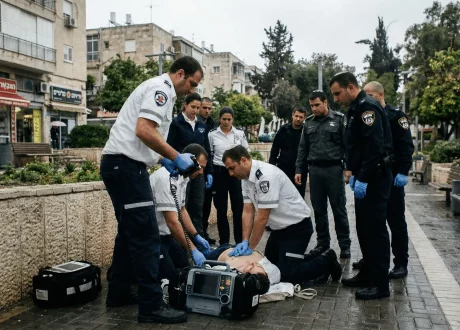
**מהספרות לשטח:מה מעכב את הטיפול באר״ן, ומה רלוונטי לנו?**
הגיליון מציג סקר בינלאומי שבו השתתפו 225 אנשי מקצוע מ־54 מדינות, שבחן את תפיסותיהם בנוגע לגורמים המעכבים טיפול ופינוי באירועים רבי־נפגעים. מעבר לממצאי הסקר, הגיליון מציע התבוננות בהקשר הישראלי, תוך התייחסות למבנה הלאומי של מד״א ולניסיון המבצעי הרב שנצבר בארגון.
—
**Resuscitation: Trends in United States Pediatric In-Hospital Cardiac Arrest Incidence and Mortality in a Nationally Representative Sample, 2009-2022**
Aim: National estimates of pediatric in-hospital cardiac arrest (IHCA) incidence in the United States rely on a voluntary registry that may underrepresent smaller and critical access hospitals. What is already known Pediatric in-hospital cardiac arrest affects approximately 15,200 children annually in the United States, with this national estimate derived primarily from a voluntary registry that may underrepresent smaller and critical access hospitals.
—
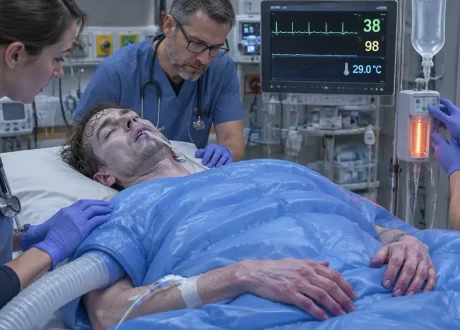
**PODCAST: Cold Case: Hypothermia in Older Adults**
He joins host Dr. Christina Shenvi for a case-based discussion of cold emergencies that you may encounter in the emergency department (ED). Dr. Geoff Comp is the Associate Program Director at Creighton University School of Medicine/Valleywise Health Medical Center in Phoenix, Arizona.
—
**PODCAST: New URI Point-of-Care Tool with Dr. Weber and Dr. Baugh**
In this episode of ACEP Frontline, special host Dr. Henry Pitzele is joined by Dr. William Weber and Dr. Christopher Baugh to discuss ACEP’s new STOP URI Point-of-Care Tool and the latest evidence-based approach to managing upper respiratory infections in the emergency department. They review best practices for diagnosing and treating COVID-19, influenza, and RSV, explore the role of antivirals, testing, and nonpharmacologic therapies, and highlight how the tool helps emergency physicians quickly apply current evidence and prevention strategies during respiratory virus season.The post PODCAST: New URI Point-of-Care Tool with Dr. Weber and Dr. Baugh first appeared on האיגוד הישראלי לרפואה דחופה.
—
**ECG Teaching Cases:No Reciprocal Changes? Still a STEMI!**
“So, what are you going to do?” “I think we should activate” “But there’s no reciprocal changes” “But looks at those elevations in V2 and V3” “Maybe we should ask the attending?” “Maybe we should ask cardiology!” As you walk into the ER to start your afternoon shift, you see the resident team huddled around an ECG whispering back and forth to each other, looking a little nervous. In contrast, in other conditions such as pericarditis or early repolarization, ST-segment elevation is often diffuse or global, not confined to a single coronary territory, and occurs without reciprocal changes.” Notice that it says “often” and not “always.” Before we dissect that small nuance, what causes reciprocal changes?