
Podcast: Play in new window | Download
Pulmonary embolism (PE) in pediatric patients is high stakes but less frequent diagnosis. Because missing a PE can be devastating, clinicians frequently order diagnostic workups, including labs and imaging. The adult PERC rule identifies adults at very low risk for PE but includes age <50 and adult heart rate cutoffs, making it inapplicable to pediatric patients. And, as we all know, children are not small adults!
To help identify children at low risk for PE and prevent unnecessary radiation exposure, Dr. Jeffrey Kline and Dr. Angie Ellison led the BEEPER study through the PECARN network (published in Lancet Respiratory Medicine, July 2026). This study prospectively derived and validated the PERC-Peds rule.
The 8 Criteria of PERC-Peds
To rule out a PE in kids without a CT or labs, the patient must meet all 8 criteria:
- Low Clinical Suspicion (Gestalt <15%): Your own clinical judgment estimates the probability of PE is under 15%.
- No Prior Venous Thromboembolism (VTE): No history of PE or DVT.
- No Recent Surgery: No surgery requiring general or epidural anesthesia within the last 30 days.
- No Estrogen Use: Patient is not currently taking estrogen-containing medications (e.g., oral contraceptives).
- No Hemoptysis: No coughing up blood.
- Age-Adjusted Normal Heart Rate:
- Age ≤12 years: Heart rate <120 bpm.
- Age >12 years: Heart rate <100 bpm.
- Normal Oxygen Saturation: SpO₂ ≥95% on room air at sea level throughout the ED stay.
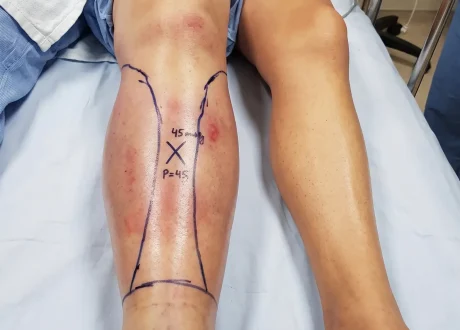
- No Unilateral Limb Swelling: No clinical features or examination findings suggesting a DVT.
The Rule of 8: if 8 out of 8 criteria met, PE can be ruled out at the bedside without further testing. If even one of the 8 criteria is not met, PE cannot be ruled out and the child requires further diagnostic evaluation (obtain D-dimer -> if elevated, obtain CTA chest).
Key Findings from the BEEPER Study
- Study Scale: Enrolled 4,039 pediatric patients across 21 emergency departments.
- Prevalence: Confirmed a 6.5% overall prevalence of VTE (4.5% image-proven PE and 2.0% proximal DVT).
- Diagnostic Accuracy:
- Sensitivity: 99.6%
- False Negative Rate: 0.1% (missed only 1 patient out of nearly 4,000)
- Negative Predictive Value (NPV): 99.9%
- Specificity: ~19.6% (low specificity, typical for broad screening rules)
Clinical Pearl: The study included proximal DVTs (above the knee/elbow) in the primary outcome because letting a child walk out of the ED with an undiagnosed proximal DVT carries an unacceptably high risk of subsequent PE.
Shift Takeaways
- Integrated EMR for the win: Use EMR-integrated tools or decision-support apps to verify age-adjusted heart rate cutoffs.
- Sequential Testing Saves Radiation: Utilizing PERC-Peds first, followed sequentially by a D-dimer for those who fail PERC-Peds, rules out PE in ~60% of evaluated children without needing a CT scan.
- Alternative Diagnoses: Common pediatric triggers (viral illnesses, COVID-19, asthma exacerbations) are often alternative causes for symptoms rather than provoking factors for PE.
Have you used the PERC-Peds rule? Share your experience with us on social media @empulsepodcast or at ucdavisem.com
Hosts:
Dr. Julia Magaña, Professor of Pediatric Emergency Medicine at UC Davis
Dr. Sarah Medeiros, Professor of Emergency Medicine at UC Davis
Guests:
Dr. Jeffrey Kline, Professor of Emergency Medicine ad Associate Chair of Research in the Department of Emergency Medicine at Wayne State University
Dr. Angela Ellison, Professor and Vice Chair Chair of Pediatrics at Children’s Hospital of Philadelphia
Resources: