Podcast: Play in new window | Download
Dr. Jonathan Thompson dives into the fascinating world of high-altitude medicine, explaining how hypoxia affects the body and lead to conditions like acute mountain sickness (AMS), high-altitude cerebral edema (HACE), and high-altitude pulmonary edema (HAPE). He highlights how hypoxia is a universal concept relevant to emergency and critical care medicine, and that understanding altitude illness can improve care for patients, whether you practice on a mountain or not!
Bio: Dr. Jonathan Thompson is a former Green Beret in the U.S. Army Special Forces and former U.S. Army Special Operations Mountaineering Instructor that taught in Colorado, Alaska, and Wyoming. He completed a Masters in Physiology at the University of Michigan with a thesis on nitrate supplementation in the prevention and treatment of acute high-altitude illnesses. He is an annual, returning guest lecturer (2020-present) at the University of Michigan’s Department of Physiology instructing undergraduate and graduate students on high-altitude physiology, pathophysiology of acute altitude illnesses, and relevant treatments.
Guest: Jonathan Thompson, MD, MS; Host: Kim Bambach, MD; Audio editor: Nick Roesel
Key Learning Points:
- The unifying concept: hypoxia
- Decreased oxygen delivery impairs cellular metabolism and underlies all altitude illness.
- Risk of altitude illnesses begins around 5,000 feet
- Risk increases with rapid ascent and poor acclimatization. The classic setup is flying in and ascending quickly.
- Physiologic response to altitude
- Hypoxia triggers the hypoxic ventilatory response → ↑ respiratory rate and tidal volume
- ↑ sympathetic activity → ↑ heart rate and blood pressure
- Respiratory alkalosis from hyperventilation → renal compensation → bicarbonate excretion → diuresis
- Over weeks, erythropoietin → ↑ red blood cell mass
- Altitude Illness Spectrum
- Acute Mountain Sickness (AMS): Symptoms include headache, nausea, fatigue, and insomnia. This is usually mild but a warning sign.
- High Altitude Cerebral Edema (HACE): Characterized by neurologic dysfunction, such as ataxia and altered mental status. HACE can be life-threatening.
- High Altitude Pulmonary Edema (HAPE): A form of non-cardiogenic pulmonary edema. Symptoms include dyspnea at rest, cough, pink frothy sputum. HAPE is the leading cause of death.
- Treatment
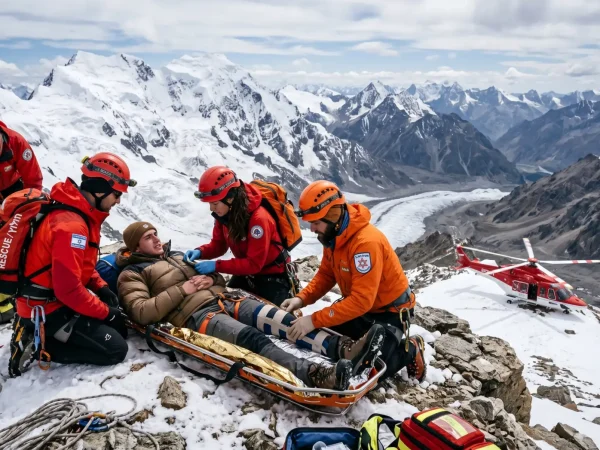
- Descent is the definitive treatment. Give oxygen if available (but it’s usually not in austere environments).
- Give Acetazolamide for AMS and HACE (both prevention and treatment)
- Give Dexamethasone for HACE (remember “HACE is AMS on steroids!”).
- Give Nifedipine for HAPE.
The Bottom Line:
The best treatment is descent, and everything else is a bridge. When you’re out adventuring, don’t forget to go slow to acclimatize!