Written by Vivian Lei

The 11th edition of Advanced Trauma Life Support (ATLS) introduces major updates, including prioritization of exsanguinating hemorrhage control (xABCDE), damage control resuscitation strategies such as permissive hypotension and early transfusion, reduced crystalloid use, revised approaches to spine motion restriction, and maintaining coordinated, team-based trauma care.
The X-Factor in Trauma: Highlights from ATLS 11
This edition of ATLS, released in 2025, introduces a major paradigm shift in trauma resuscitation, emphasizing rapid hemorrhage control, damage control resuscitation, and improved team-based trauma care.
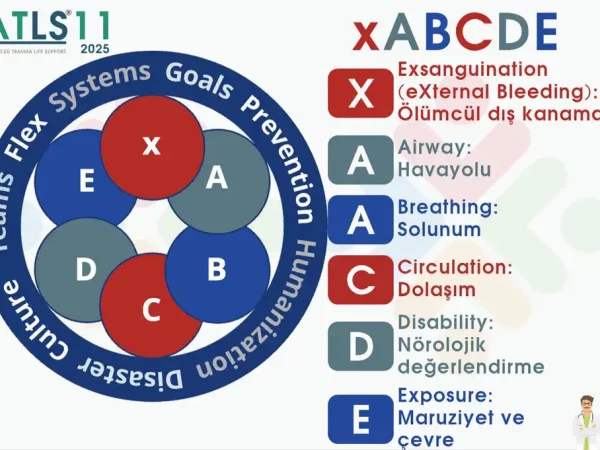
The most notable change is prioritizing control of exsanguinating hemorrhage before airway management. The traditional ABCDE sequence has been revised to xABCDE, formalizing control of exsanguinating external hemorrhage as the first step in resuscitation. This change reflects mounting civilian and military evidence demonstrating that uncontrolled bleeding is a leading cause of preventable trauma death. Rapid interventions such as tourniquets, wound packing, and pelvic binders are emphasized as immediate, high-yield actions.
Resuscitation strategies now emphasize damage control. Key principles include:
- Permissive hypotension until hemorrhage control.
- Minimizing use of crystalloids as “bridging fluids” until blood products or whole blood is available.
- Early activation of massive transfusion protocols.
- Balanced 1:1:1 component therapy or low-titer O-negative whole blood when available.
- Tranexamic acid (TXA) administration within 3 hours for major hemorrhage (1 g bolus + 1 g infusion), with a 2 g bolus supported in traumatic brain injury (TBI).
Airway management continues to prioritize rapid sequence intubation after initial resuscitation, with video laryngoscopy now preferred as a primary intubation tool. Volume resuscitation prior to induction and selective vasopressor use to prevent peri-intubation hypotension are emphasized.
Spinal motion restriction is now selective and criteria-based, with deemphasis on rigid collars, particularly in penetrating trauma. Neuroprotective targets for TBI are specified (SBP >100–110 mmHg depending on age), with tiered ICP management strategies.
Importantly, ATLS 11 expands beyond procedural updates to include leadership, communication frameworks, trauma-informed care, disaster preparedness, and system-level integration. This reflects a shift from protocol-driven sequencing to patient-centered, team-based trauma systems design.
How will this change my practice?
Although these changes may not substantially alter my clinical practice in a well-resourced trauma center, they represent an important effort to standardize evidence-based trauma care across diverse practice settings. The shift toward prioritizing hemorrhage control and damage control resuscitation reflects evolving evidence in trauma care and represents a meaningful modernization of the ATLS curriculum.
Source
Advanced trauma life support 2025: A brief review of updates. Injury. 2026 Feb 3;57(4):113079. doi: 10.1016/j.injury.2026.113079. Epub ahead of print. PMID: 41671886.