Podcast: Play in new window | Download
Core EM Modular CME Course
Maximize your commute with the new Core EM Modular CME Course, featuring the most essential content distilled from our top-rated podcast episodes. This course offers 12 audio-based modules packed with pearls! Information and link below.
Patient Presentation & Workup
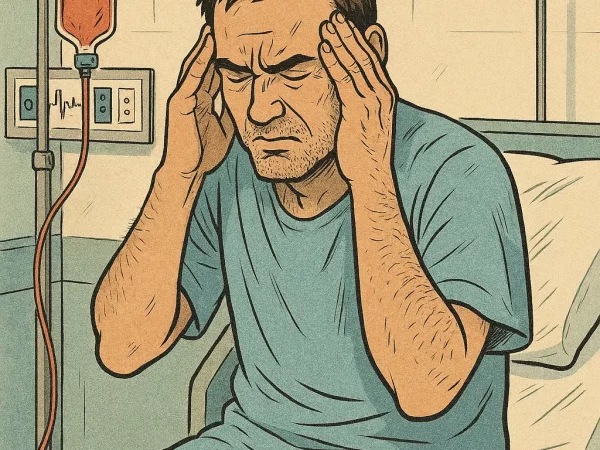
- Patient: 36-year-old male, currently shelter-domiciled, presenting with 3 weeks of generalized weakness, fevers, weight loss, and headaches.
- Vitals (Initial): BP 147/98, HR 150s, Temp 100.2°F, RR 18, O2 99% RA.
- Clinical Evolution: Initial assessment noted cachexia and a large ventral hernia. Following initial workup, the patient became acutely altered (A&O x0) and febrile to 102.9°F.
- Physical Exam Findings:
- Brudzinski Sign: Positive (knees flexed upward upon passive neck flexion).
- Kernig Sign: Discussed as highly specific (resistance/pain during knee extension with hip flexed at 90°).
- Meningeal Triad: Fever, nuchal rigidity, and AMS (present in 40% of cases; 95% of patients have at least two of the four cardinal symptoms including headache).
- Imaging:
- Chest X-ray: Scattered opacities (pneumonia) and a small pneumothorax.
- CT Abdomen/Pelvis: Confirmed asplenia (secondary to 2011 GSW/exploratory laparotomy).
- Head CT: Ventricle enlargement concerning for obstructive hydrocephalus and diffuse sulcal effacement.
CSF Analysis & Microbiology
- Bacterial Meningitis
- Opening Pressure: Elevated (Normal is <170 mm H2O).
- Color: Cloudy or turbid.
- Gram Stain: Positive in 60%–80% of cases before antibiotics; drops to 7%–41% after antibiotics.
- Cell Count: Very high (>1000–2000/mm3 WBC); dominated by neutrophils (>80% PMN).
- Glucose: Low (<40 mg/dL); CSF/blood glucose ratio is <0.3–0.4.
- Protein: High (>200 mg/dL).
- Cytology: Negative.
- Viral Meningitis
- Opening Pressure: Normal.
- Color: Clear or bloody.
- Gram Stain: Negative.
- Cell Count: Slightly elevated (<300/mm3 WBC); dominated by lymphocytes (<20% PMN).
- Glucose: Normal.
- Protein: Moderately elevated (<200 mg/dL).
- Cytology: Negative.
- Fungal Meningitis
- Opening Pressure: Normal to elevated.
- Color: Clear or cloudy.
- Gram Stain: Negative.
- Cell Count: Elevated (<500/mm3 WBC).
- Glucose: Normal to slightly low.
- Protein: High (>200 mg/dL).
- Cytology: Negative.
- Neoplastic (Cancer-related) Meningitis
- Opening Pressure: Normal.
- Color: Clear or cloudy.
- Gram Stain: Negative.
- Cell Count: Elevated (<300/mm3 WBC).
- Glucose: Normal to slightly low.
- Protein: High (>200 mg/dL).
- Cytology: Positive (this is the key differentiator).
Management Protocol
- Immediate Treatment: Early administration of antibiotics/antivirals is critical to reduce mortality.
- Antibiotics: Ceftriaxone 2g IV q12h + Vancomycin (or Rifampin in cephalosporin-resistant areas).
- Listeria Coverage: Add Ampicillin for patients > 50 years old.
- Antivirals: Acyclovir 10 mg/kg q8h.
- Steroids: Dexamethasone 10 mg IV q6h for 4 days (proven to reduce mortality and improve outcomes).
- Surgical Intervention: Neurosurgery performed an emergent EVD in the ED to relieve pressure from obstructive hydrocephalus.
- Post-Exposure Prophylaxis: Indicated only for N. meningitidis (not S. pneumoniae) for contacts < 24 hours from diagnosis.
- Regimens: Rifampin for 2 days, single-dose Ciprofloxacin, or IM Ceftriaxone (if pregnant).
Stats & Clinical Pearls: Austrian Syndrome
- The Triad: Concurrent pneumonia, endocarditis, and meningitis caused by Streptococcus pneumoniae.
- Risk Factors: Asplenia (due to the spleen’s role in filtering encapsulated bacteria), alcohol use disorder, and immunosuppression.
- Mortality Rate: Extremely high at 28%; mortality is highest when there is CNS involvement.
- Incidence: Worldwide, S. pneumoniae is the leading cause of bacterial meningitis, accounting for 3,000–6,000 cases annually.