Podcast: Play in new window | Download
“This learning material is sourced from Emergency Medicine Cases and has been published here with permission as per Creative Commons copyright.”
Topics in this EM Quick Hits podcast
Deborah Schonfeld on pediatric urinary retention & acute transverse myelitis (01:27)
Jesse McLaren on Occlusion MI Diagnosis (24:44)
Matthew McArthur on post-dural puncture headache (31:34)
Joseph Yasmeh on Med Mal Cases: clenched fist injury (42:42)
Brit Long on IV thrombolysis for minor strokes (59:27)
Victoria Myers & Lauren Westafer on mentorship and what it means to be a physician leader (1:11:34)
Podcast production, editing and sound design by Anton Helman
Podcast content, written summary & blog post by Brandon Ng, edited by Anton Helman, December, 2025
Cite this podcast as: Helman, A. Schonfeld, D. McLaren, J. McArther, M. Yasmeh, J. Long, B. Myers, V. Westafer, L. EM Quick Hits 69 – Pediatric Urinary Retention & Acute Transverse Myelitis, Post-Dural Puncture Headache, Med Mal Cases: Clenched Fist Injury, IV Thrombolysis for Minor Stroke, EM Leadership Spotlight #4. Emergency Medicine Cases. December, 2025. https://emergencymedicinecases.com/em-quick-hits-month-year/. Accessed December 3, 2025.
Pediatric Urinary Retention & Acute Transverse Myelitis
Definition of urinary retention in pediatrics
Inability to void at least 12 hours, no urine output for 12 hours, greater volume of urine in the bladder expected for age, or palpable bladder distension.
Max bladder capacity in mL = age + 2 x 30 (for <12 years of age)
Pediatric urinary retention history taking tips
- Can be reported as feeling that the child is “holding urine”, unable to fully empty bladder, or frequent bathroom trips with weak stream.
- May have significant abdo pain, abdo/bladder distension, restlessness/irritability.
- Try to differentiate from oliguria vs. retention.
Differential diagnosis of pediatric urinary retention
- Infectious/inflammatory: UTI/cystitis, balanitis/balanoposthitis, vulvovaginitis.
- Obstructive: Phimosis, meatal stenosis, labial adhesions, urethral strictures, posterior urethral valves, external (intrabdominal or pelvic) compression, hematometrocolpos (vaginal/uterine accumulation of blood due to obstruction), constipation.
- Postoperative/anesthesia
- Dysfunctional urine voiding: behavioral, lack of coordination between bladder and urethral sphincter muscle.
- Neurogenic: interruption at any level from brain to spinal cord to peripheral nerves.
- Spinal cord:
- Compressive: spinal tumors (e.g. ependymomas, astrocytoma), epidural abscesses, herniated discs, hematoma.
- Inflammatory: acute transverse myelitis, GBS.
- Malformation: spinal bifida, tethered cord.
- Spinal cord:
- Medications: anticholinergics/antihistamines, sympathomimetics (often in decongestants).
Clinical pearls for pediatric urinary retention
- Counsel parents to let patient urinate within warm water; decreases direct contact of acidic urine with inflamed or irritated tissue and can reduce withholding behavior.
- Unexplained urinary retention is always concerning: consider neurologic pathologies if other tests are negative.
Pediatric acute transverse myelitis
- Rare, inflammatory, demyelinating disorder of the spinal cord.
- Highest incidence between 10-40 years of age, with 20% occurring in the pediatric population.
- Etiology: idiopathic (post-infectious/autoimmune process), secondary (associated with active infections, systemic inflammatory conditions, connective tissue disorders), or part of demyelinating or CNS condition (e.g. MS, acute disseminated encephalomyelitis).
Clinical features of transverse myelitis
- Typically presents over hours to days.
- Affects transverse section of one or more levels of the spinal cord with motor/sensory/autonomic dysfunction below the level of the lesion in a myelopathic distribution.
- Motor: Rapidly progressive paraparesis/paraplegia.
- Sensation: reduced or absence sensation below the affected level, back pain, dysesthesia.
- Autonomic: bowel or bladder incontinence or retention.
- Often missed on initial visit, with patients returning to ED with progressive symptoms.
Bottom line: Urinary retention may present variably in pediatric patients. In pediatric patients with otherwise unexplained urinary retention, consider neurogenic causes of urinary retention in patients.
Triptych Approach to Occlusion MI Diagnosis
Classic STEMI Criteria for OMI
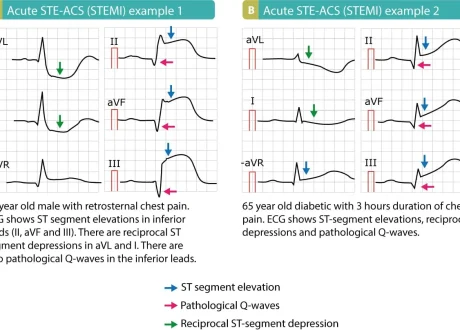
- LR+ = 12.5: STEMI criteria present = OMI becomes much more likely even if patient does not have classic symptoms.
- LR− = 0.59: STEMI criteria absent only slightly lowers probability = cannot rule out OMI in higher-risk presentations.
The “Triptych” Approach to Improve Accuracy of OMI Diagnosis
- Determining pre-test likelihood for OMI based on history and assessment
-
- A = anginal equivalents (not just chest pain)
- C = continuous vs resolved symptoms
- S = stability (hemodynamic)
- ECG
-
- Advanced OMI signs perform better (LR+ = 14, LR− = 0.23): e.g. Modified Sgarbossa criteria increases likelihood of OMI in LBBB, or lack of reciprocal AVL change decreases OMI likelihood when there is borderline inferior ST elevation
- POCUS
-
- Patients can have OMI without any ECG changes
- Use POCUS to look for regional wall motion abnormality: especially with high pre-test likelihood but subtle/non-diagnostic ECG
Bottom line: ECG represents only one aspect of the clinical picture. Do not interpret ECGs using STEMI criteria alone. Consider POCUS to enhance diagnosis of OMI.
Deeper Dive and practice ECGs: ECG Cases 57 Art of Occlusion MI Part 5 – Clinical-ECG-POCUS Triptych
Register for Dr. McLaren’s HEARTS ECG Course to master your ECG interpretation skills.
Post Dural Puncture Headache (Post LP Headache) Recognition, Prevention and Management
Consider post-dural puncture headache in any patient with new positional headache that occurs within five days of a dural puncture.
Clinical features of post dural puncture headache
- Symptom severity ranges from mild to debilitating
- Positional headache after recent lumbar puncture within 5 days
- Relieved by lying down, intolerable pounding headache when upright
- Associated neck & shoulder stiffness/pain, tinnitus, visual disturbances (diplopia), and dizziness/vertigo
Risk factors for post dural puncture headache
- Patient: younger age and female sex.
- Procedural: Size and type of spinal needle (larger needles and sharper bevel increases risk).
Prevention of post dural puncture headache
- Routine use of non-cutting spinal needles for lumbar puncture for all population (Grade A evidence, high level of certainty) (Uppal et al. 2023).
- If using cutting needle, use narrowest gauge possible and position needle with bevel aligned in longitudinal axis of the spine.
Investigations for suspected post dural puncture headache
- Neuroimaging: not routine, consider if focal neurological deficits, vision changes, altered GCS or seizures, or suspecting an alternative diagnosis.
Treatment of post dural puncture headache
- Symptoms typically self-resolves within 1 week (time taken for punctured dura to heal).
- Non-pharmacologic:
- Support supine position for comfort.
- Maintain adequate hydration (preferably oral).
- Pharmacologic:
- NSAID or acetaminophen, or short course of opioids.
- There is some evidence to suggest that caffeine up to 900 mg per day if presenting <24h of symptom onset may improve symptoms
- Procedural:
- Epidural blood patch (definitive treatment): 20mL of patient’s own blood injected into epidural space at the level of the dural puncture. Performed by anesthesia.
- Temporary local nerve block, including occipital nerve block (Uppal et al. 2023).
- Temporary transnasal sphenopalatine block: topical lidocaine/bupivacaine applied into both nostrils until contact made with posterior pharynx x10-15min (Uppal et al. 2023).
MedMal Cases: Clenched Fist Injury – Fight Bite
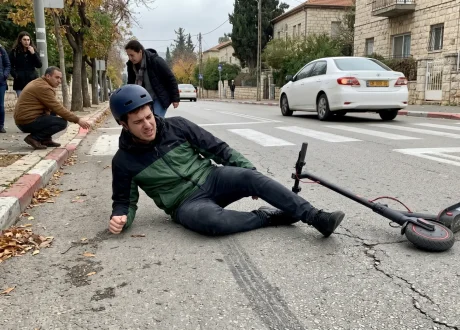
This case involves an young adult male who presents with an injured hand that occurred when “messing around with some friends” when a brick “fell directly onto the back of his left hand”. The case highlights the importance of spotting the disconnect between the patient’s story and the presenting wound.
Clenched Fist Injury (Fight Bite) = consider in any laceration over the dorsal aspect of MCP or PIP joints, usually in the dominant hand.
Pathophysiology of clenched fist injury (fight bite)
- Fist-to-tooth contact – inoculation of human oral flora often into the joint space.
- When hand relaxes – skin and tendon wound retract, sealing bacteria inside the joint fluid.
- Synovial fluid acts as a nutrient-rich medium – rapid, severe joint infection despite benign skin findings.
Red-flag exam: Pain with passive finger motion = deep infection (infectious tenosynovitis/septic arthritis) until proven otherwise.
Investigations for suspected clenched fist injury (fight bite)
- X-ray to rule out fracture or foreign body. Does not rule out tendon/ligament/joint capsule injury or infection.
Critical Error #1: During wound care (including anesthetizing, irrigation and exploration), the tendon sheath was “frayed”, but the wound was closed with sutures.
- Frayed tendon sheath – direct signs inoculation injury likely into the joint space.
- Fight bite should be left open to drain.
Critical Error #2: Cefazolin/cephalexin were given for the skin and soft tissue injury.
- Inadequate coverage for human bite organisms (fastidious gram-negative rods, Eikenella corrodens (often multi-drug resistant), Strep viridans, anerobes.
- Tetanus booster (if not up to date) required given likely contaminated environment
- Typical antibiotic first line: Amoxicillin-clavulanate
Critical Error #3: Patient was discharged with a splint and told to follow-up with a plastic surgeon in several days.
- Recommended follow up is re-evaluation within 24 hours (in the ED or by plastics).
Additional considerations: An accurate diagnosis and reasonable plan may fail if the patient can’t access treatment.
- Give first antibiotic dose in ED.
- Choose affordable/generic options.
- Consider involving social work/case management to ensure the patient can obtain and start meds promptly.
Bottom line: Trust the injury pattern not the story, injury over the knuckles of young person = clenched fist injury until proven otherwise. For bite wounds: irrigate thoroughly, do not suture primarily, splint hand in position of function, follow-up within 24-48 hours, and preferred antibiotic is amoxicillin-clavulanate. Acknowledge and address barriers of care to help ensure that patient gets the treatment you prescribe.
*This case was obtained from Dr. Mike Weinstock’s EM Boucebacks series of closed legal cases
IV Thrombolysis for Disabling Minor Stroke
To address an EM Caser’s concern about the questionable evidence for IV thrombolysis in patients who present within 4.5 hours of symptom onset with a minor stroke (defined as NIHSS ≤5) but their stroke is deemed disabling, we asked Brit Long for an evidence-based deep dive…
Current Guidelines
- AHA and ASA: IVT within 4.5h for patients with ischemic stroke.
- Canadian Stroke Best Practice Recommendations (2022): eligible patients with disabling ischemic stroke, who can receive IVT (alteplase/tenecteplase) within 4.5h of stroke symptom onset time/last known well time should be offered IVT (Strong recommendation; High quality of evidence).
- ACEP clinical policy (2024):
- Stroke patients who are candidates for both mechanical thrombectomy and IVT, IVT should be offered and may be given prior to mechanical thrombectomy, and that if IVT will be administered, it should be given within 4.5h from symptom onset (Level B recommendation).
- When feasible, shared decision making between the patient/surrogate and the health care team should include a discussion of potential benefits and harms prior to the decision whether to administer IVT (Level C recommendation; Consensus recommendation).
Literature on IVT in disabling strokes:
- Several meta-analyses have attempted to pool data on RCT data, but study limitations (including heterogeneity among trials, selective emphasis on trials claiming IVT benefit, individual trial bias, financial conflicts of interest, trials stopping early, low power) limit conclusions that can be drawn.
| Evidence supporting IVT | Evidence against IVT |
| 2 trials between 1995 to 2012 have demonstrated benefit:
· NINDS II (1995): n = 333, 12% benefit with IVT in 3 hours. · ECASS III (2008): n = 821, 8% benefit with IVT in 3-4.5 hours.
|
Re-analyses of NINDS II and ECASS III suggest that baseline imbalance in stroke severity likely responsible for the difference in outcome supporting IVT. Accounting for differences, there is likely no benefit with IVT and potential risk of harm (Hoffman and Schriger 2009, Alper et al. 2020). |
| Fragility index was 3 for NINDS II and 1 for ECASS III. | |
| Most RCTs have not found a benefit with IVT. | |
| 5 RCTs suggest increased mortality with IVT in stroke (12-16% higher risk). |
Literature on IVT in non-disabling stroke:
- Several available studies comparing IVT to antiplatelet therapy (aspirin +/- clopidogrel/ticagrelor): PRISMS trial (2018), ARAMIS trial (2023), TEMPO-2 trial (2024) and PUMICE trial (2024).
- A 2025 meta-analysis found no improvement in excellent recovery with thrombolysis, but there were lower odds of 90-day independence with thrombolysis (OR 0.7, ARD 2.5%, NNH 40) and an increased mortality with thrombolysis (OR 2.4, ARD 1.5%, NNH 66)
- Limitations: heterogeneity with differing definitions of disabling symptoms, agents, time windows for treatment, routine care strategies, concomitant interventions, follow-up times.
- Trials did not enroll patients with strokes presenting with isolated dysarthria, ataxia, facial weakness, sensory symptoms, and other isolated symptoms not captured by the NIH stroke score.
- Overall, evidence suggest that risk of IVT outweigh benefits in patients with non-disabling strokes.
Optimizing practice:
- Define disability in strokes based on the individual patient rather than on the NIHSS.
- For nondisabling strokes, current data strongly support antiplatelets and risk factor modification, not thrombolysis.
- In disabling stroke, legal implications of not giving thrombolytics may outweigh risk of complications from IVT.
- Follow your local institutional protocols on IVT in stroke, and ensure neurology is on board.
- Present purported risks and benefits of IVT to patients/family, used shared decision making, and document the discussion.
Bottom line: Evidence overall suggests that risk of IVT may outweigh benefits in patients with minor stroke, however for disabling minor strokes, IVT should be offered. Consider legal implications of not giving IVT in disabling minor strokes. Reference your local institutional protocols on IVT for stroke.
For further listening on referenced EMCases episodes and Dr. Katie Lin’s take on the evidence for thrombolysis is disabling minor stroke in the comments sections: Ep 208 Paradigm Shift in Ischemic Stroke Management Part 1: Disabling Strokes and Ep 209 Nondisabling Stroke Recognition and Management.
- Powers WJ, Rabinstein AA, Ackerson T, Adeoye OM, Bambakidis NC, Becker K, Biller J, Brown M, Demaerschalk BM, Hoh B, Jauch EC, Kidwell CS, Leslie-Mazwi TM, Ovbiagele B, Scott PA, Sheth KN, Southerland AM, Summers DV, Tirschwell DL. Guidelines for the Early Management of Patients With Acute Ischemic Stroke: 2019 Update to the 2018 Guidelines for the Early Management of Acute Ischemic Stroke: A Guideline for Healthcare Professionals From the American Heart Association/American Stroke Association. Stroke. 2019 Dec;50(12):e344-e418. Epub 2019 Oct 30. Erratum in: Stroke. 2019 Dec;50(12):e440-e441.
- American College of Emergency Physicians Clinical Policies Subcommittee (Writing Committee) on Thrombolytics; Lo BM, Carpenter CR, Milne K, Panagos P, Haukoos JS, Diercks DB; Members of the American College of Emergency Physicians (ACEP) Clinical Policies Committee (Oversight Committee); Diercks DB, Anderson JD, Byyny R, Carpenter CR, Friedman BW, Gemme SR, Gerardo CJ, Godwin SA, Hatten BW, Haukoos JS, Kaji A, Kwok H, Lo BM, Mace SE, Mattu A, Promes SB, Shah KH, Shih RD, Silvers SM, Slivinski A, Smith MD, Thiessen MEW, Thompson JT, Tomaszewski CA, Trent SA, Valente JH, Westafer LM, Wall SP, Yu Y, Lin MP, Finnell JT, Schulz T, Vandertulip K. Clinical Policy: Use of Thrombolytics for the Management of Acute Ischemic Stroke in the Emergency Department. Ann Emerg Med. 2024 Dec;84(6):e57-e86.
- National Institute of Neurological Disorders and Stroke rt-PA Stroke Study Group. Tissue plasminogen activator for acute ischemic stroke. N Engl J Med. 1995 Dec 14;333(24):1581-7.
- Hacke W, Kaste M, Bluhmki E, Brozman M, Dávalos A, Guidetti D, Larrue V, Lees KR, Medeghri Z, Machnig T, Schneider D, von Kummer R, Wahlgren N, Toni D; ECASS Investigators. Thrombolysis with alteplase 3 to 4.5 hours after acute ischemic stroke. N Engl J Med. 2008 Sep 25;359(13):1317-29.
- Hoffman JR, Schriger DL. A graphic reanalysis of the NINDS Trial. Ann Emerg Med. 2009 Sep;54(3):329-36, 336.e1-35. doi: 10.1016/j.annemergmed.2009.03.019. Epub 2009 May 23. PMID: 19464756.
- Alper BS, Foster G, Thabane L, Rae-Grant A, Malone-Moses M, Manheimer E. Thrombolysis with alteplase 3-4.5 hours after acute ischaemic stroke: trial reanalysis adjusted for baseline imbalances. BMJ Evid Based Med. 2020 Oct;25(5):168-171.
- Doheim MF, Nguyen TN, Xiong Y, Chen HS, Bhatt NR, Wang Y, Nogueira RG. Meta-Analysis of Randomized Controlled Trials on IV Thrombolysis in Patients With Minor Acute Ischemic Stroke. 2025 Aug 12;105(3):e213863.
- Long B, Gottlieb M. Intravenous Thrombolysis for Minor Acute Ischemic Stroke. Acad Emerg Med. 2025 Sep 4.
- https://first10em.com/thrombolytics-for-acute-ischemic-stroke-nnt-evidence-review/
- https://rebelem.com/thrombolysis-in-acute-ischemic-stroke-now-we-have-no-positive-rcts/
- https://thesgem.com/2020/07/sgem297-tpa-advocates-be-like-never-gonn